After digging out part of the mountain to place the creeper farm; I now have enough cobblestone for the observers needed to automate some food production.
I had been doing more fishing, but I haven’t had time to keep up with that. I’ve decided I want to automate a food source and a food source I haven’t used before.
Low ethics chicken farming
A staple of my previous worlds has been a chicken based xp farm. It’s a really effective solution to food and small/medium amount of xp. Perfect for repairing gear or getting a level or two to make the cut off for an enchantment.
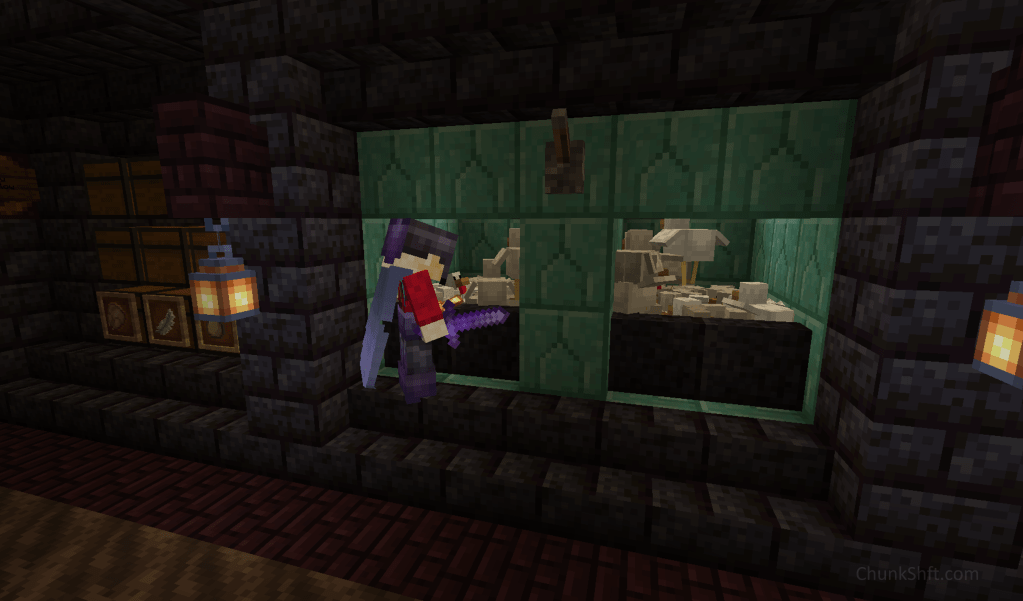
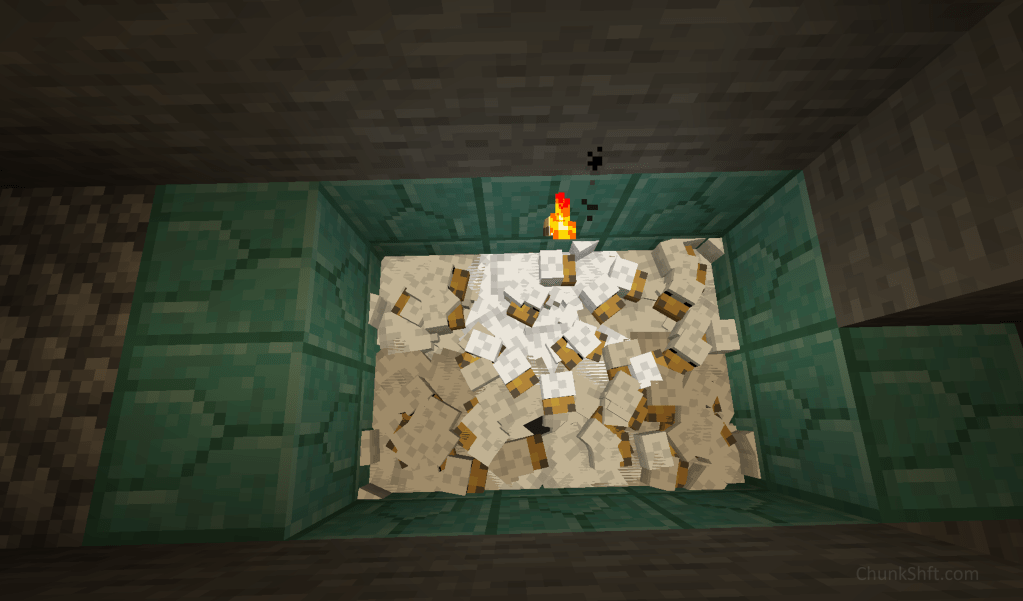
There’s two reasons I don’t want to use one this time around; the first being xp. Having built a skeleton farm already the xp from a chicken farm is not significant enough for me to consider building one now. I have a plan to expand my mob based xp in the near future, meaning even if it was incrementally better it would soon be surpassed.
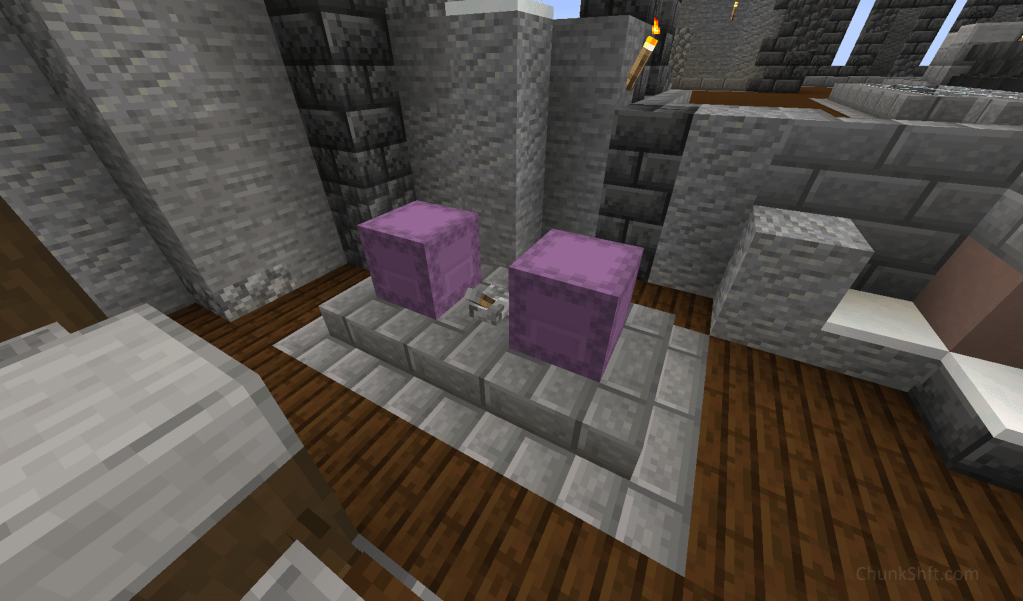
The second reason is that I want to try a new food source. While I have improved the design over the years to reduce lag and automation of some of it’s parts, it’s time to move on.
There are a few criteria I am considering for the food source:
- I want it to be fully automatic or very close.
- I don’t want to use villagers (potatoes, wheat or carrots).
- I don’t want it to be focused on a singular mob (zoglins or chickens).
Crafter
With the addition of the crafter, which I haven’t even crafted yet, we get more options for automating food production.
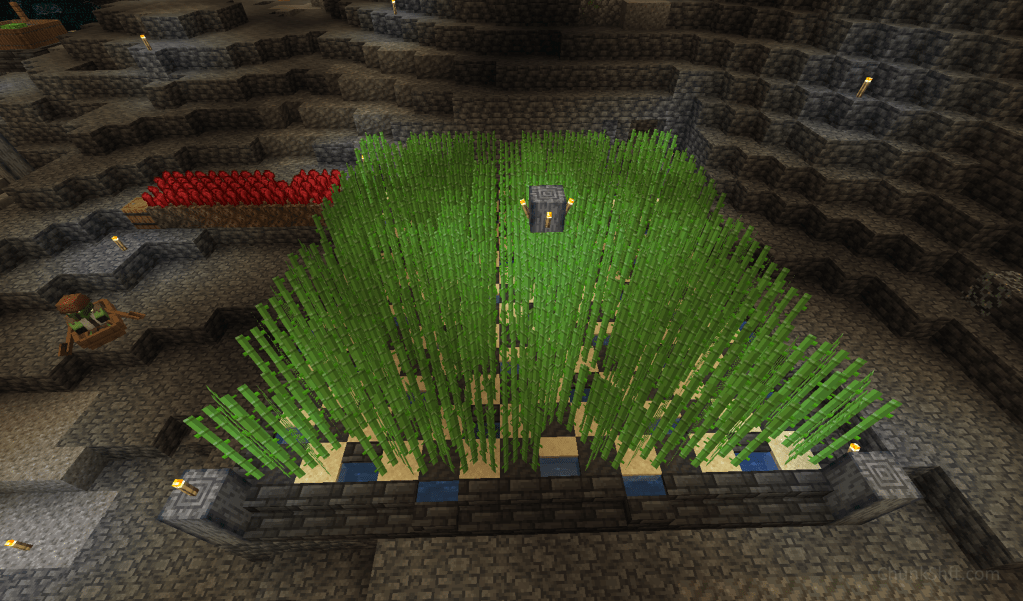
Those of you who have been following this let’s play know that I built the above sugarcane farm. It is manual and is the part of this system that won’t be automated. This farm produces more than I need and I can harvest a large quantity very quickly.
The other ingredients
The next two ingredients will be eggs and pumpkins. We are making pumpkin pie!
- Semi free range chicken coop for egg collection.
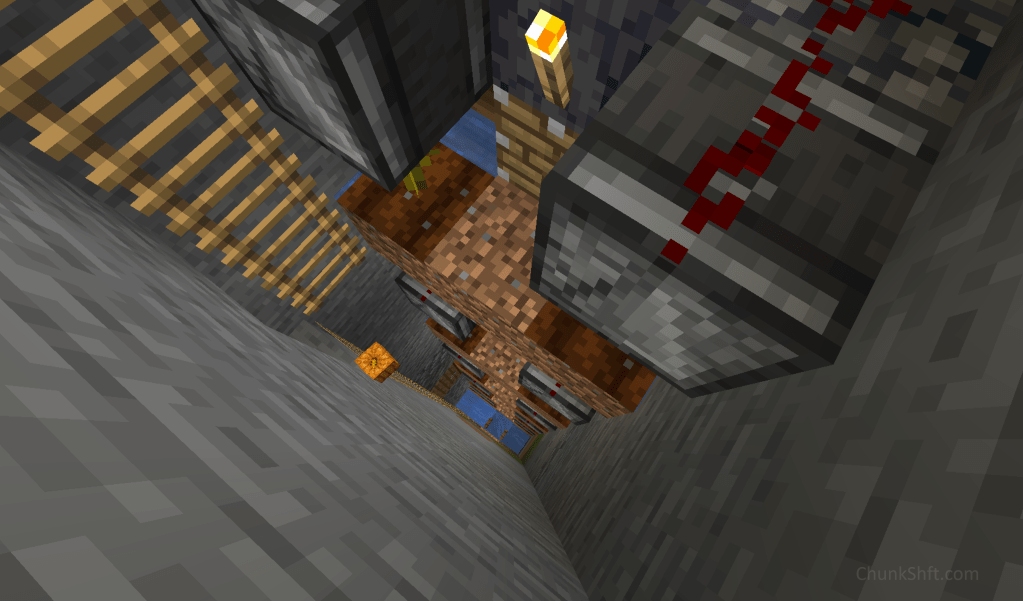
- Automated pumpkin farm hidden under the castle and within the stone tower.
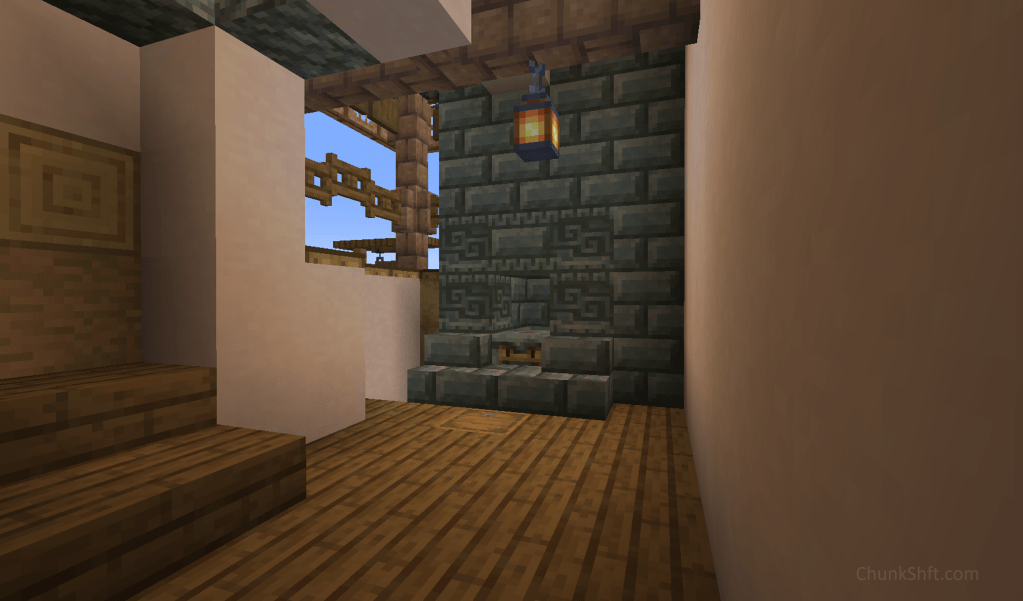
This is the bakery oven with a crafter built into the facade. The interior will get more attention once I address my under performing pumpkin farm.
The sugar (player crafted from sugar cane) is placed into a hopper at the rear of the crafter. The pumpkins are delivered to the right hand side (from this perspective) via water and ice. The eggs flow in from hoppers on the left.
The hoppers for the eggs run below the path and need to be brought up to the height of the crafter with droppers. The dropper lift, and the rate of egg laying, governs the pie crafting rate.
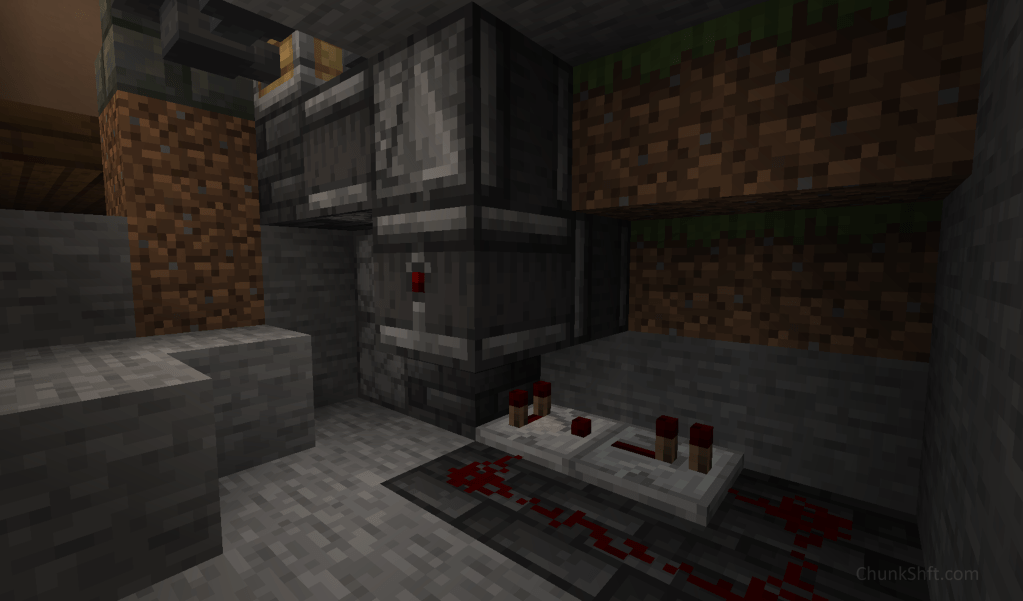
When an egg enters the bottom dropper it activates a hopper clock. I used a clock rather than just a comparator so that the system can handle multiple eggs coming in at once. Without the clock the observer will activate when the hopper is filled, and if if two eggs entered together only one is moved up and the comparator remains on.
By using a clock the comparator is turned off again if multiple eggs are present and will continue to attempt to empty the bottom dropper until it is completely empty. This does mean it’s not a silent system as the droppers are activated when empty causing the annoying click. On the scale and frequency seen here it is not an issue.
The observer chain that operates the dropper elevator is used to activate the crafter. With a hopper in front hidden under a slab that feeds the collection barrel in the floor.
The bakery
The exterior of the build is more or less done. I’m happy with the detailing and how it and the castle appear to belong next to one another. That is the builds are visually separate but contextually coherent.
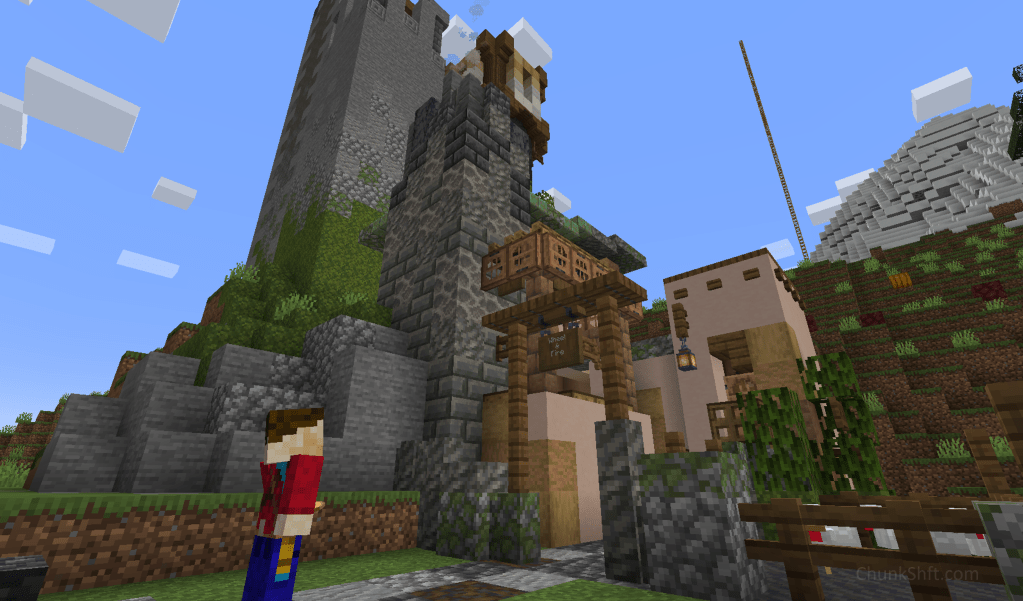
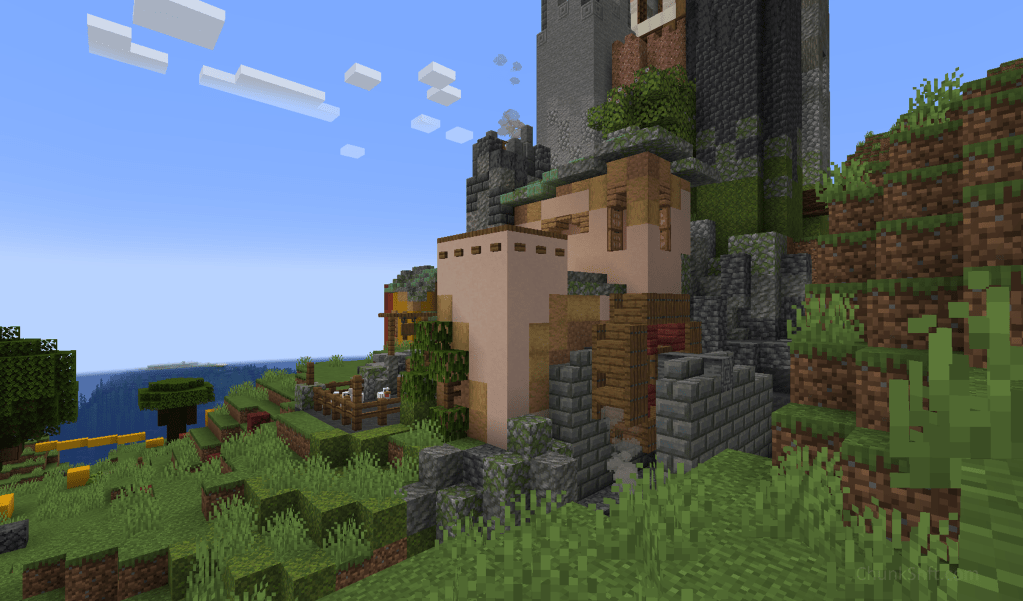
The single azalea tree at the base of the castle was a gamble when placed. I find that it gives the impression that both structures have been here for a while and nature has taken advantage of the spaces inhabitants have left available.
The river will be a later project as builds on both sides of the river are established. I have added some camp fires to simulate steam and mist from the turbulent waters.
Planned future regression
I have built an automatic pumpkin farm for now but it’s not producing at a high enough rate. I considered building a larger one under the bakery, but have decided I’ll build a couple pumpkin patches near by.
As I wrote above, the rate of crafting is determined by the chicken egg laying rate. I reduced the chicken population but pumpkin rates are still lower than the chickens.
The move to a manual farm is mostly a game play decision. I’ll breed up some lamas to help move around the ingredients. I’ll be planting some sugar cane along the river as well. It’ll make this place appear more lived in if there are some crops and livestock in the area.
I will then need to build a stable(s) to house the lamas in while breeding and in their duties as beasts of burden. It may result in some other functional builds making the town more realistic. For example how do the lamas navigate the small streets? Are there more industrial focused paths or methods of moving goods around?
New experiences
This might be the first time I’ve eaten pumpkin pie. I’m satisfied with it’s hunger restoration and saturation. In finishing the exterior detailing a small reserve of pie has already built up. That is thanks to it’s effectiveness as a food rather than the rate of production.
I feel between this build and some work on the castle (update coming soon) that I’m hitting a groove on 1 Chunk building and the scale that dictates. Prior to the let’s play I didn’t build at this scale.
I’m learning like a good song writer, to figure out what can be left out of the story. What needs to be there to connect the visual lines for the viewer and what the brain can fill in. How much detail is too much and that not every idea I’ve ever had has to be in a build.
Build Stats
Real Life Days: 17
Minecraft Days: 38
Hours: 9

 ChunkShift.com
Leave a comment