I’ve been in the pit of the techno-cave this month working on designs to collect drip-stone.
In this post I cover the designs I used and some of the challenges with each.
An artificial Island
This world is my forever world. 1 chunk builds are my main strategy to keep it that way; however, I have maintained a few large projects. These projects, like the Mycelium Storage Project, serve a major gameplay function and exist where a 1 chunk option wasn’t viable.
The guardian XP farm is 1 of those large projects. Not having a reliable XP source quickly stalls game advancement. Luckily, my seed gifted me a water monument next to my island.
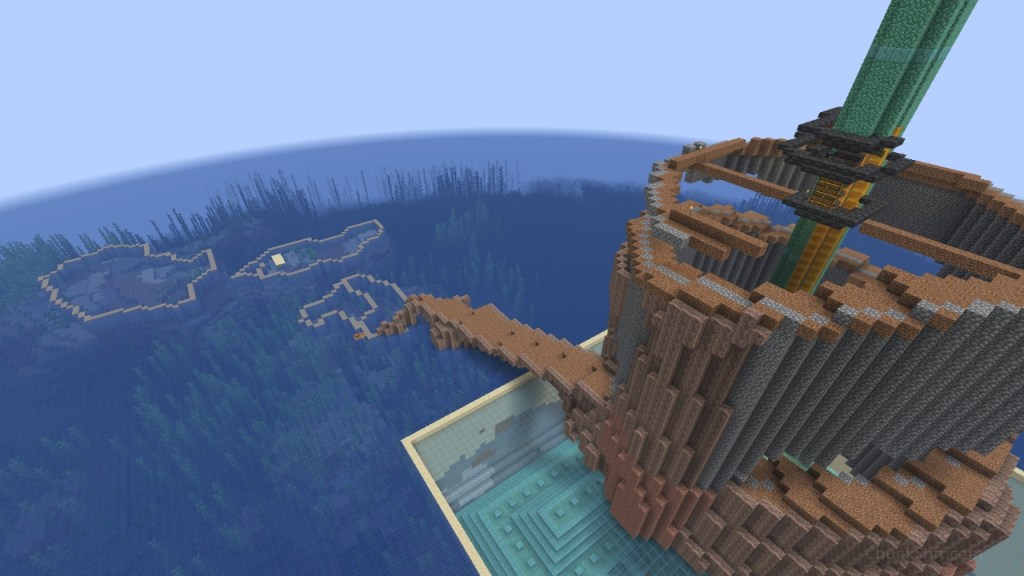
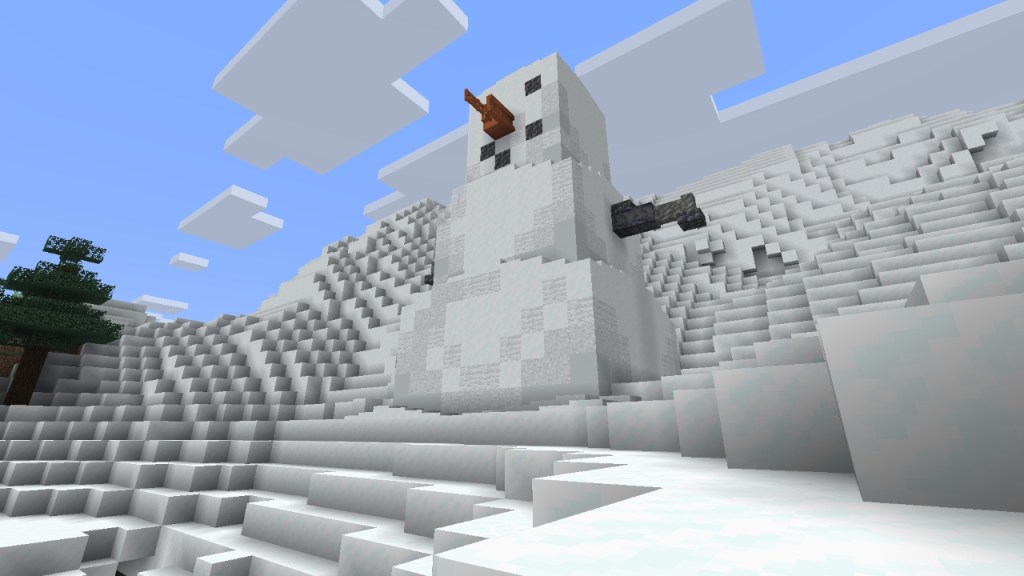
While the farm can be easily rationalized; the chain of islands I’ve started building around it cannot.
While this mega-build flies against my ethos, I’ve committed to it. That’s where the decision to build a dripstone farm comes into the picture. Dripstone is a farmable block and I thought I could passively farm dripstone while I work on other projects. Avoiding having to harvest the blocks manually and making this mega build less demanding.
But first we demo
This project finally forced me to pull out the remnants of my failed creeper farm. This corner of the techno-cave had lots of height, no plans.

With the location decided on the next question was how would this farm work?
Looking for alternatives
A flying machine breaking a long area of pointed drip stone is probably the best way to get large amounts of dripstone. I wanted to try other options as flying machines can break and I wanted to keep this farm to a 1 chunk build.
Farm 1 – Mining a dripstone cave
Before trying any farm designs, I went to a dripstone cave biome. Unfortunately no dripstone cave biomes are close by, requiring a trip through the nether to the first trial chamber I explored.
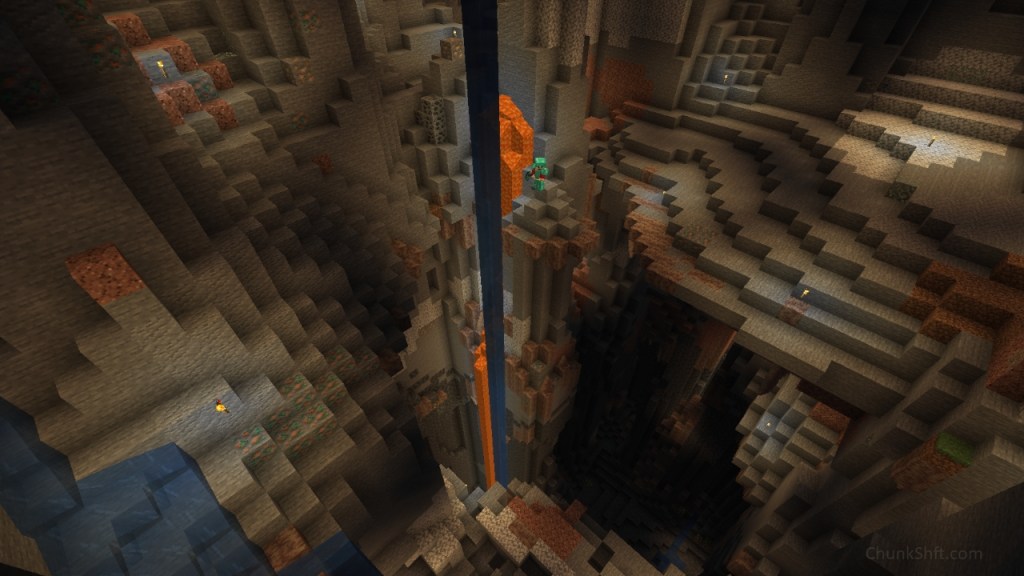
I had used up the dripstone I had on hand and needed some to get started farming. After filling my inventory with a mix of blocks I returned home.
This trip made one issue clear. Without shulker boxes and trips to collect blocks providing a distraction from other projects I would build a farm closer to home.
Farm 2 – Shifting Ceiling
This made a lot of sense in my head until I realized the pointed dripstone needs to get re-planted after each harvest. This may not be a deal breaker for you and might be the perfect solution depending on your needs.
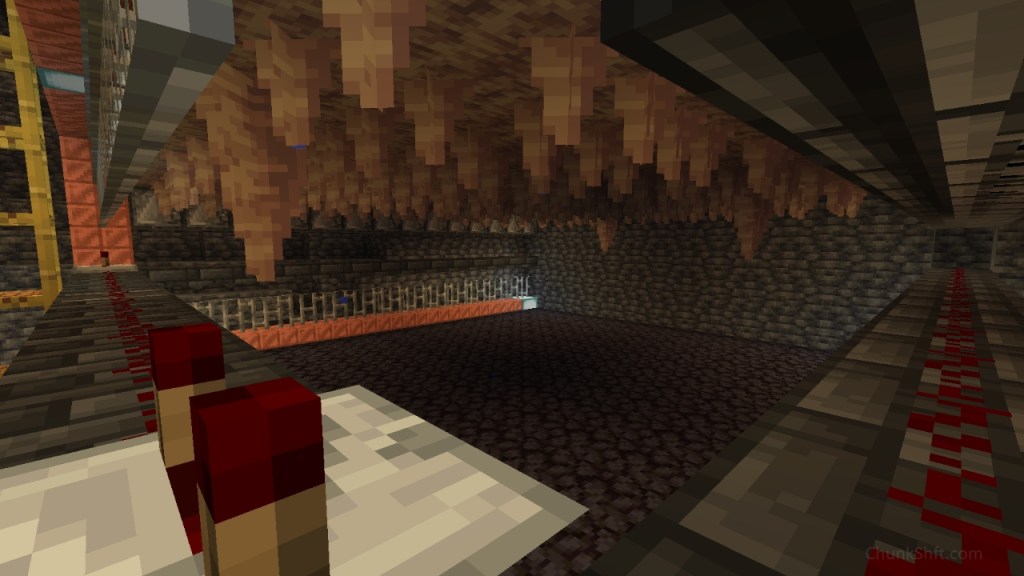
A few notes; bottom slabs on the floor prevent stalagmites from forming. The redstone functions like a flower farm. A set of pistons push the floor in one direction. A repeater delays the signal to a second set of pistons that push the floor back to it’s starting position.
Farm 3 – Skulk sensor street lamp
I thought this would be a really cool design to use as street lamps scattered around the cavern floor. Unfortunately bats and player activity mean the pistons are often extended and little growth of the dripstone occurs.
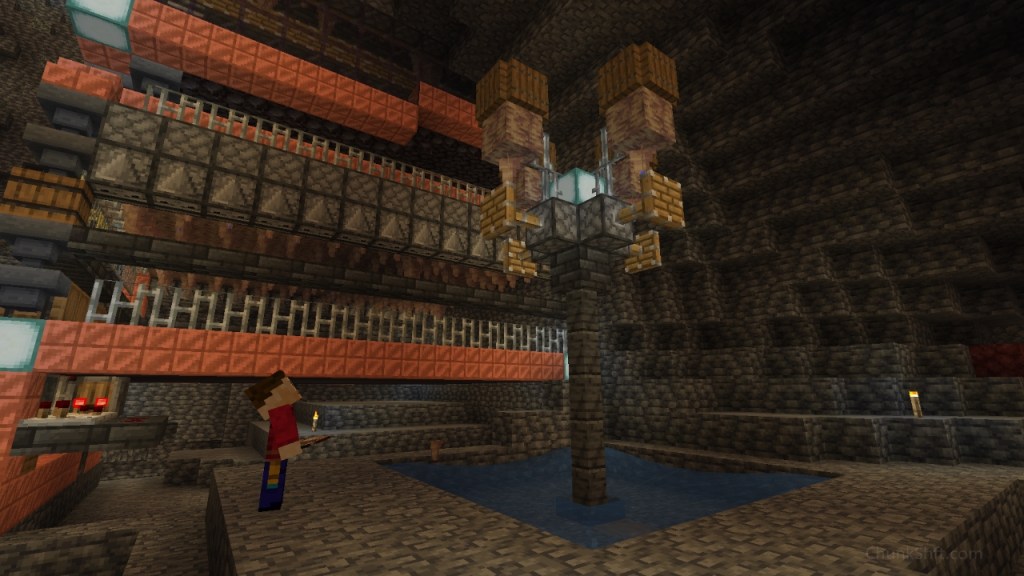
An expensive alternative would be to switch the posts out for observers; or another mechanism to trigger the farm only when dripstone stalactites are ready for harvest.
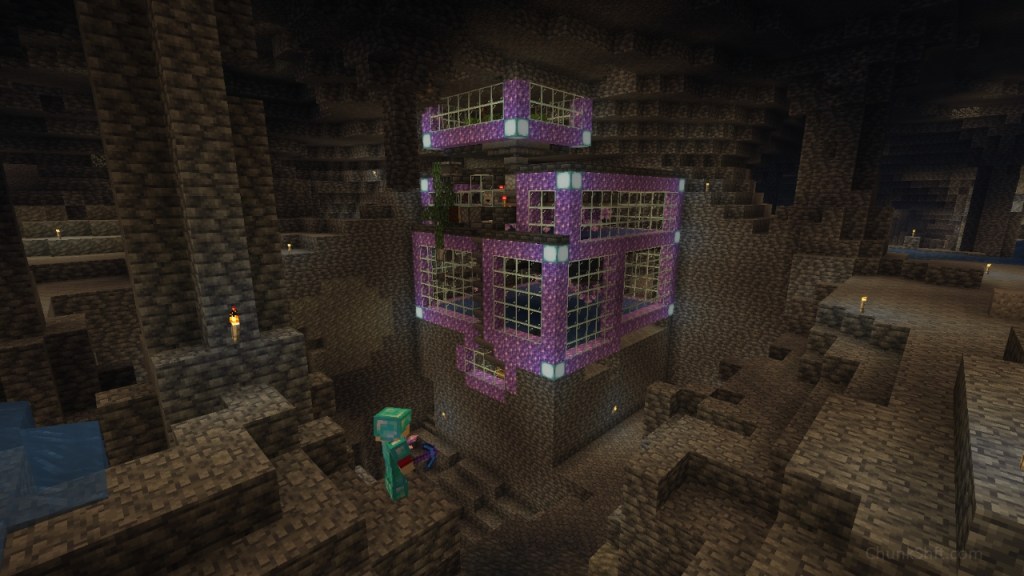
4. Multiple floors and semi-automation
My final design involved 2 strategies. Both of which have multiple floors.
- A player interactive portion with a principle similar to a simple cobblestone generator. (3 floors)
- A fully automated portion using pistons and observers(4 floors)
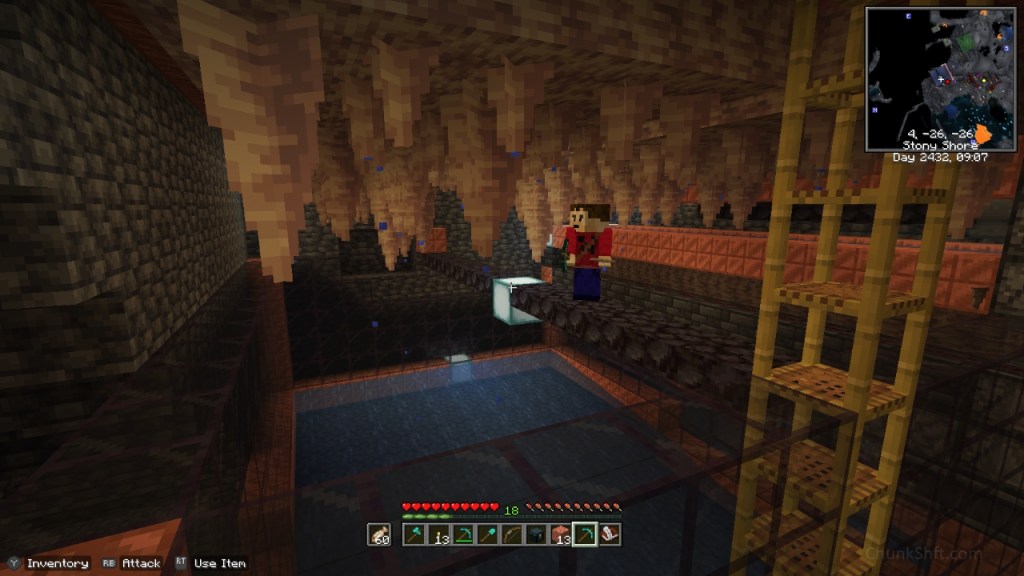
The player interactive design functions like a simple cobblestone farm. Pointed dripstone hangs 5 deep along a platform. The player breaks stalagmites 1 block below their source. They fall into a water and are pushed to 1 side of the farm for collection by the player.
The fully automated portion uses row of pistons to break the stalagmites 1 block below their source. Water streams collect pointed dripstone into hoppers which feed an automatic crafter at the bottom of the farm.
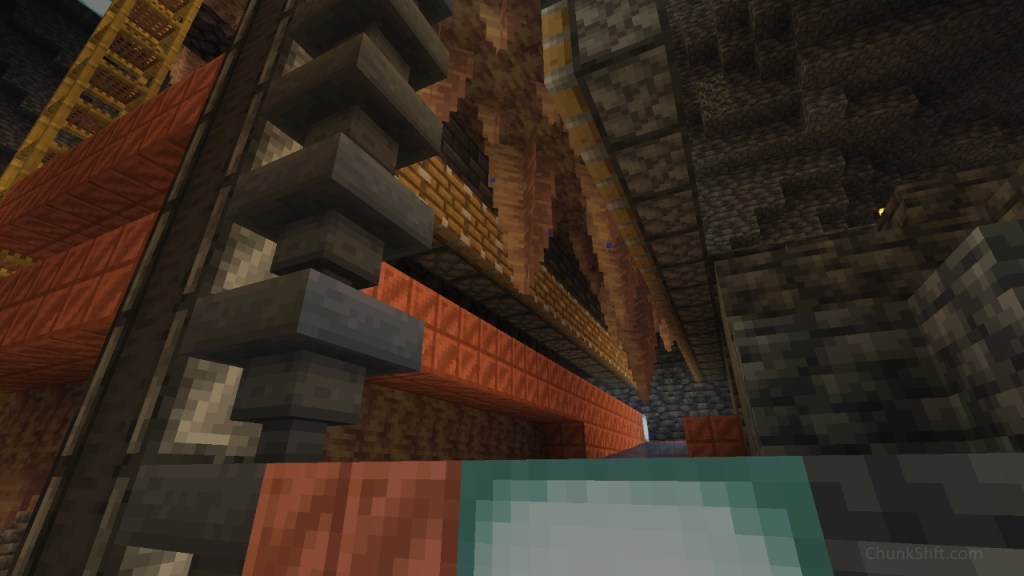
This section is 2 wide on each floor and triggers when a stalactite on the first floor grows in front of an observer. There’s definitely room to improve this part of the system and collection could be done with less hoppers.
When compared to my shifting ceiling design the redstone was made cheaper here. There is a line of redstone that runs along a solid block on top of the pistons. 2 repeaters boost and wrap the signal around the back of the farm.
Wrap up
You’ll want to wrap your farm in a full block regardless of the design to minimize lost blocks. I’ve decided to use tinted glass for two reasons. I like the contrast with copper and the recipe doubles the glass than you start with.
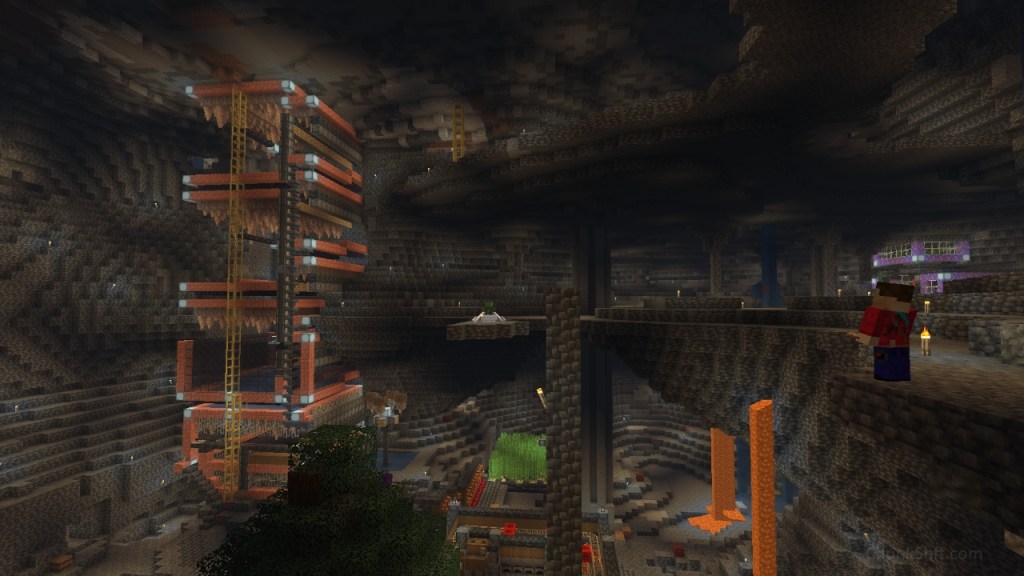
The final farm will probably serve me well over time. But if I’m honest, I’ve been going back to the trial chamber to mine dripstone anyways.
I shouldn’t need this much dripstone again in the future, but keep in mind if you have a big project you may need to supplement your farms production.
Build stats
Real Life Days: 25
Minecraft Days: 53
Hours: 9.75
This build was a 1 chunk build, if you’d like to see more 1 chunk builds click here.

 ChunkShift.com
Leave a comment