Building this amethyst farm was not about shards; it was about scratching a human itch. The process itself, a reminder its never the product, its the process. Something a little radical in today’s world.
The result is a farm that works great for a survival player who doesn’t need for a high output farm.
It works sometimes
I use to build more redstone contraptions and farms in my worlds. I didn’t always know what I was doing, but that was part of the fun. Problem solving.
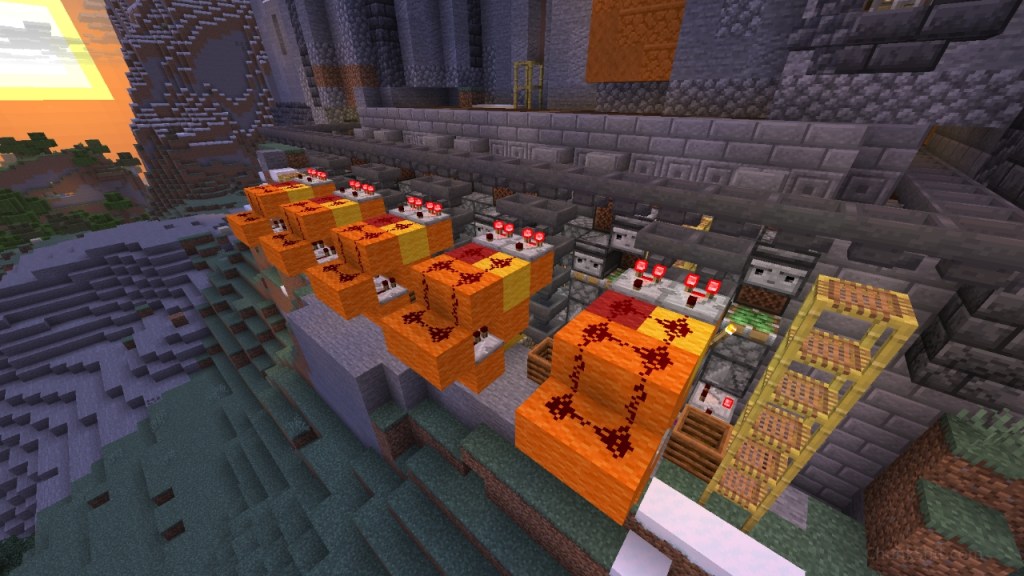
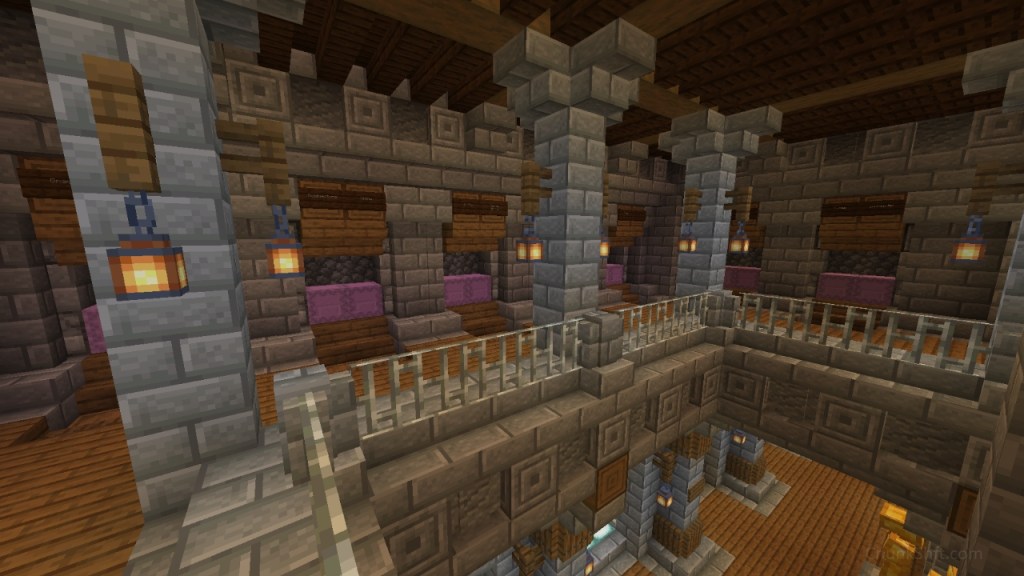
For example, my attempt to build a tile-able shulker loader. I fell short of a tile-able design and settled on a 2 wide solution. But had something that worked.
When I took my design from creative into survival; however, it occasionally failed. In this example I learned that you shouldn’t have complicated redstone cross a chunk boarder. Problem solving.
After a year of building things focusing on how they look over their function I needed a different challenge.
Saving my prized rock
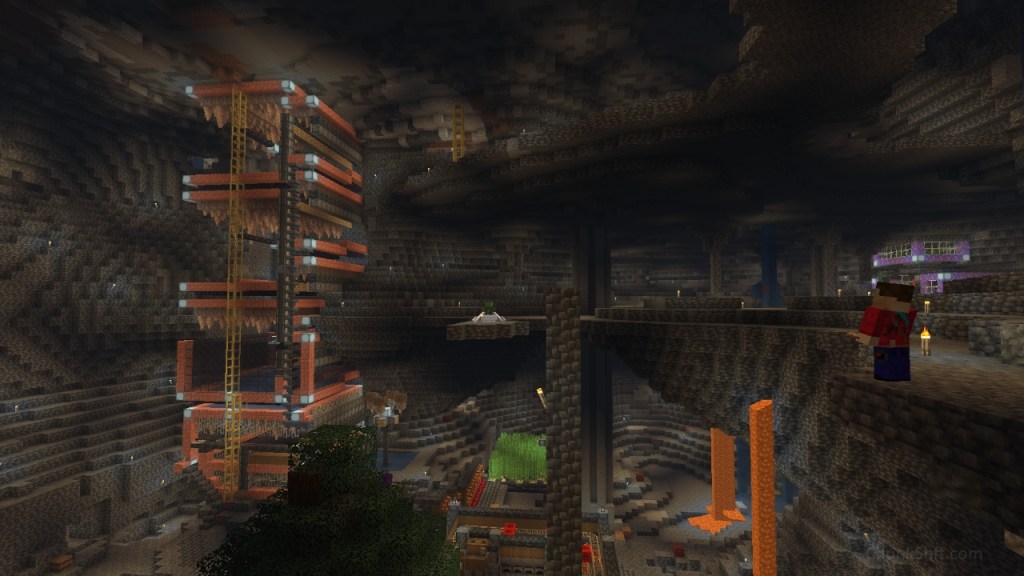
The techno-cave has a prominent geode I could have turned into a farm. While this large geode in the centre of the cavern would seem like a great location; I’m saving it for aesthetic reasons.

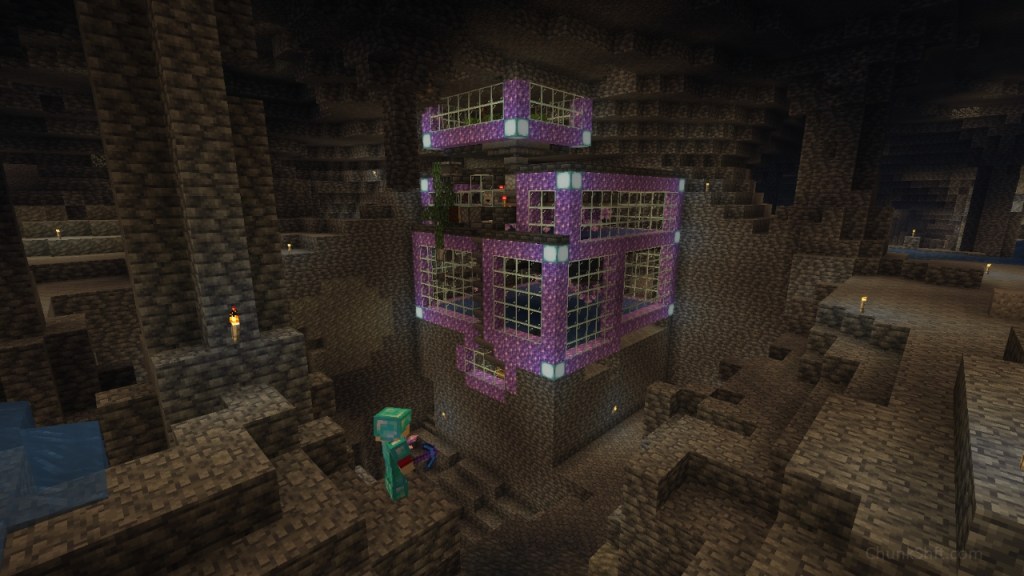
I instead found an exposed geode on the opposite side of the cavern. Still easily accessible from the cavern floor by a waterfall.
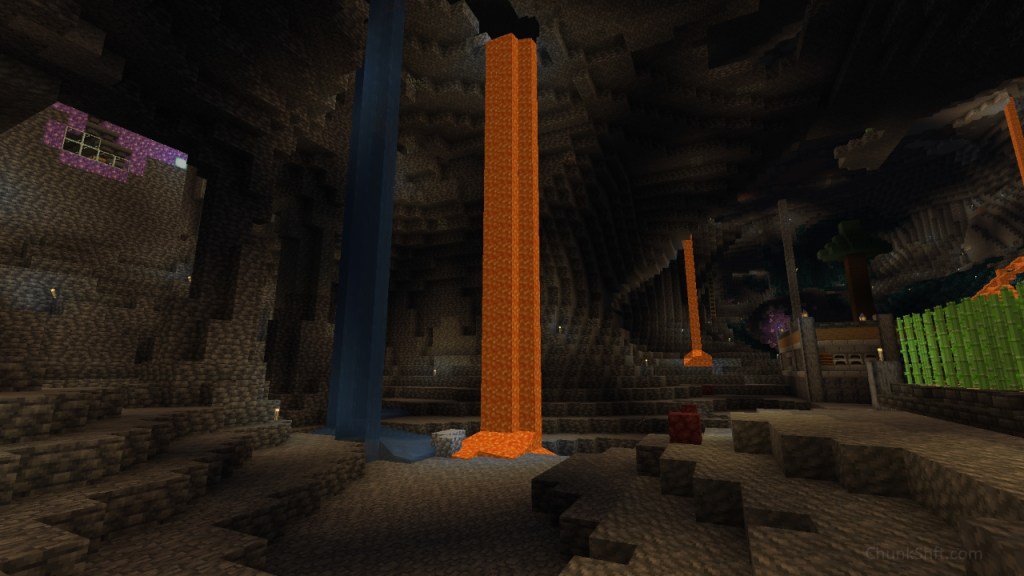
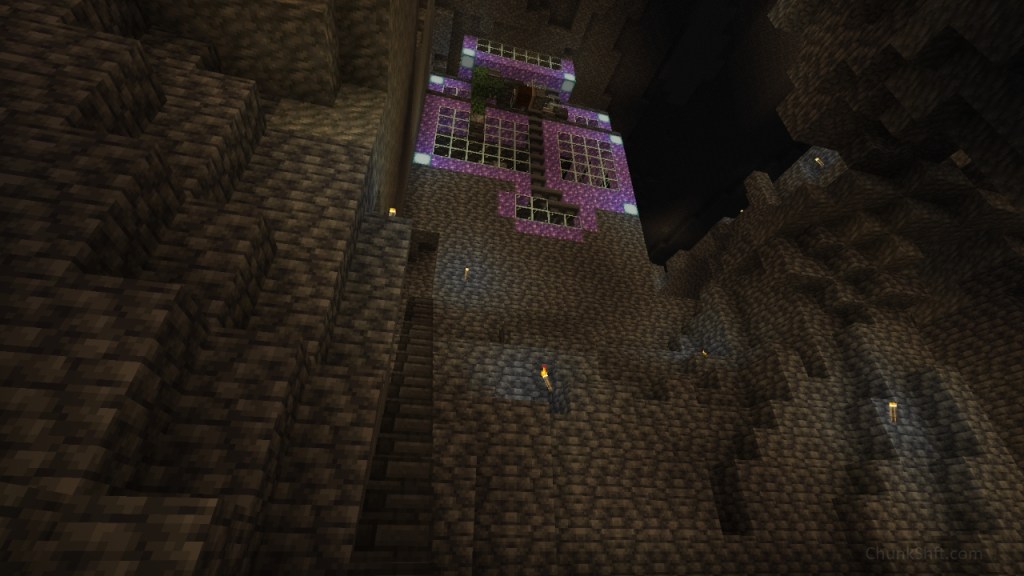
And after some TNT now accessible from the cavern floor. A staircase runs up to chests that catch the shards and cactus from the timing system.
Amethyst clusters, shards and tinted glass
Amethyst geodes were added in the first of two caves and cliffs updates. An amethyst geode can generate in any overworld biome and tend to be lower down (deepslate level). They are made up of a few blocks with budding amethyst the key block for this post.
Among the blocks of amethyst you’ll find some have cracks or maybe clusters growing. These clusters grow through 4 stages before they can be harvested for amethyst shards. Silk touch will allow you to collect the cluster at any stage of growth and fortune will increase the number of shards dropped.

If the shard has completed all 4 stages of growth it can be broken with a piston or block if it is pushed into the cluster. Breaking clusters by pushing blocks or pistons into them is the path to automation.
My design involves using a timer to wait for the shards to reach their final growth stage and deploying pistons to break the shards. Collecting them in a water stream for collection and use later.
There’s a few uses for shards; I recommend heading over to the Minecraft Wiki for more details.
The cactus clock
The first problem to solve was that I’ve never built a counter that ran longer than a minute or two. I thought about reading the passage of days using a daylight counter. But I couldn’t easily do that with flooded caves between the geode and the surface.
Whether it was daylight or another method I needed to build a counter. Measuring bud growth is possible but stages can be missed resulting in buds being harvested before their final stage (dropping no shards).
Needing a counter no matter what it is I’m counting; I started work there. It was while building the counter I decided on how I would achieve a counter over 2 hours. I would use a small cactus farm.
As cactus leaves the farm small farm of 6 plants they will go into a counter. The counter uses the fullness of a container against another signal and emits a signal once the container reaches a level of fullness.
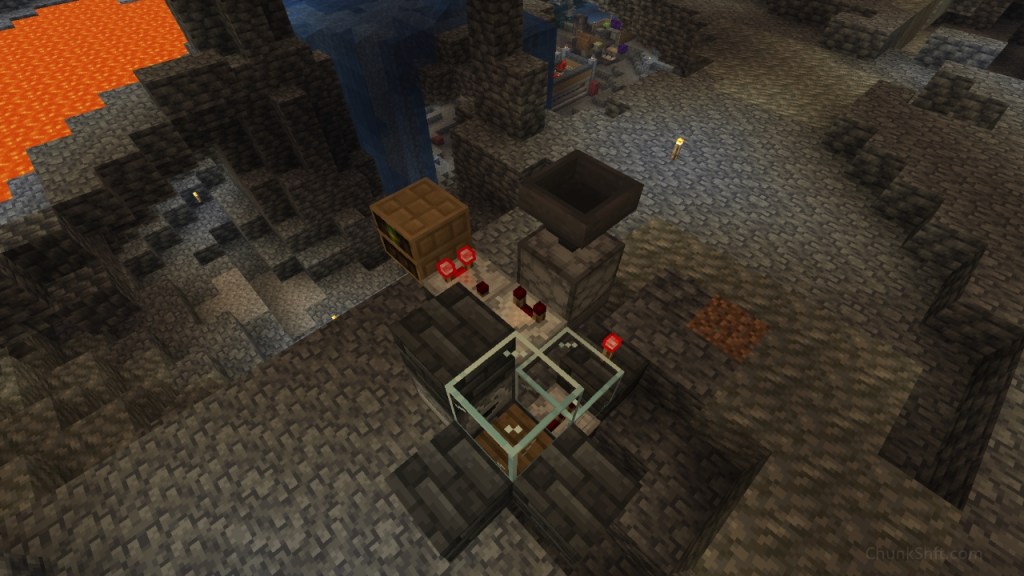
The cactus blocks enter the hopper (pictured above) and go into a dropper. A comparator (in subtraction mode) takes an output from the dropper and is compared to a bookshelf. A book placed (and taken out of) the second slot sets a condition where 41 items in the dropper allows a signal to pass to a second dropper and a cactus is dispensed onto a pressure plate.
This unlocks a hopper immediately under the first dropper with cactus flowing now into this second dropper. This ensures cactus are in this dropper to be dispensed each time the signal conditions described above are met.
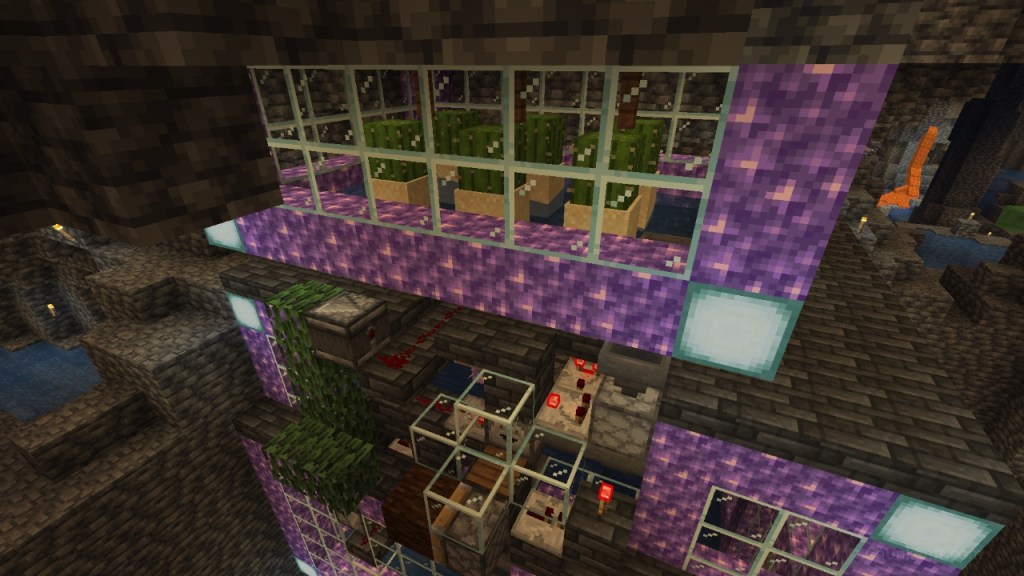
The dispensed cactus item will sit on a pressure plate for 5 minutes (de-spawn time). This is more than enough time to drain the first dropper, resetting the item count. Once the cactus de-spawns the system is re-locked and starts counting to 41 as new cactus blocks flow into it. I’ve set up a ImpulseSV item sorter to drain the second dropper keeping the system from backing up.
I haven’t done the exact math but this is enough time for the buds to reach all growth stages and drop shards when broken. Cactus and amethyst clusters grow on random ticks.
Time in Minecraft is measured by ticks, randomly ticks are chosen and growth of objects have a chance to occur on these random ticks. If a cactus grows the new block breaks and goes into the counter. I found that 6 cactus plants count to 41 slower than it takes for all the clusters in this farm to grow 4 times.
You could likely add more cactus plants to improve efficiency. Look up growth rates, do the math and comment below if there’s a better answer.
Simplify
I found that I didn’t need the biggest, most complicated harvesting solution for my farm (and neither do you). Flying machines and complex piston layouts result in higher outputs but are harder to build.
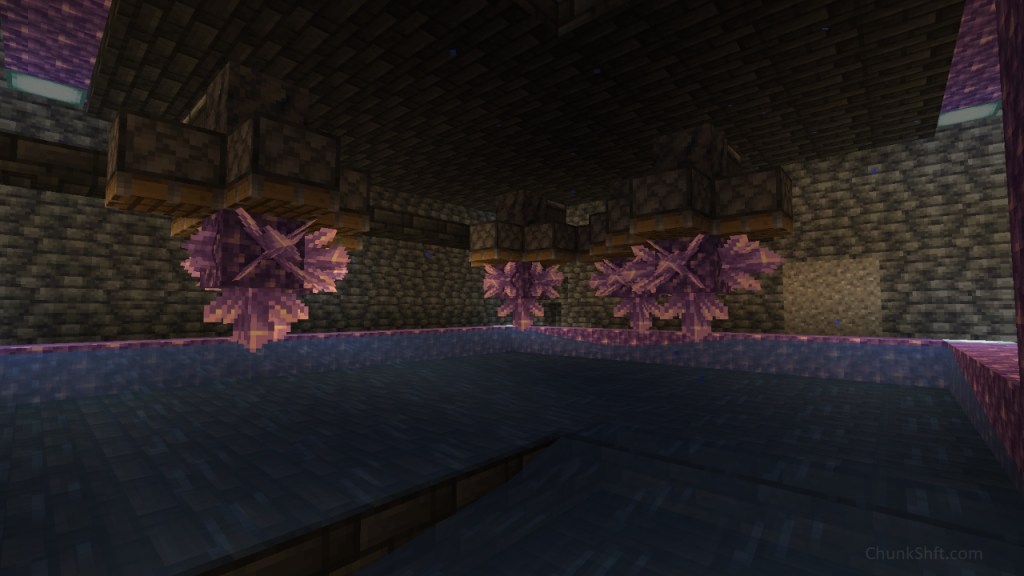
I decided to remove many of the buds creating two levels. This allowed for a simple piston layout, easy redstone wiring and loss-less shard collection. Giving 80% of the result of a complicated design with 20% of the effort.
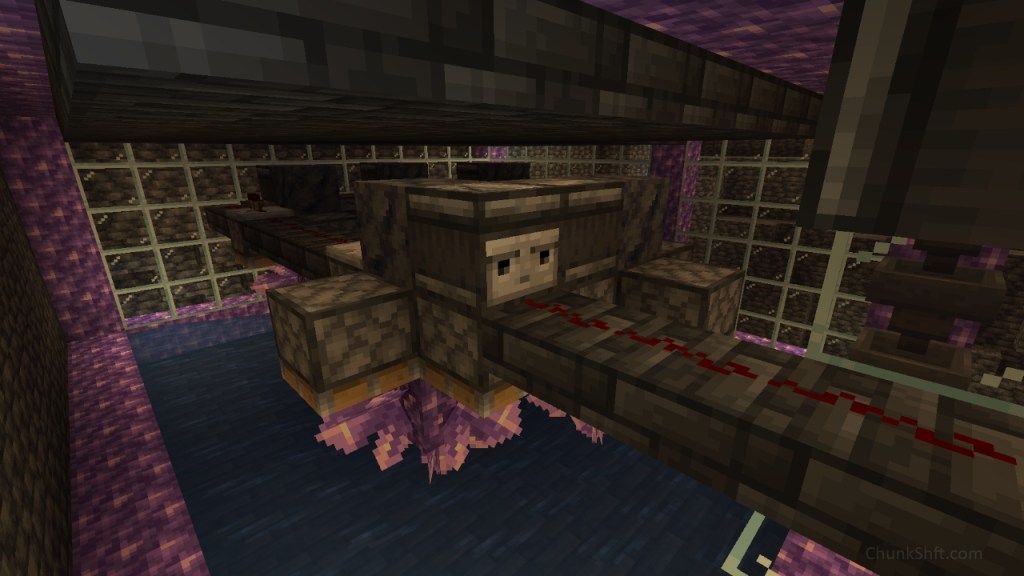
I’m relying on the leaf bock update mechanic to operate the redstone on both levels when the timer goes off. When the pressure plate is activated by the cactus; a piston extends pushing a log into leaves. Observers detect this as a block update. leaves detect wood up to 7 blocks away; this is how leaves decay when logs are taken away.
Wrap up
This project has been a departure from my build style so far in this series. Creating a farm for a resource I don’t really have a issue getting in an aesthetic from the earlier years of Minecraft was a nice change of pace.
On a final note; redstone works differently between Java and Bedrock editions. While the majority of users are on bedrock, content creators tend to use Java. It’s worth checking the Minecraft Wiki for differences between the two versions (or recent updates) before you implement a farm you see in someone’s content.
Build stats
Real Life Days: 42
Minecraft Days: 151
Hours: 8
This build was a tutorial, if you’d like to see more tutorials click here.


 ChunkShift.com
Leave a reply to Building a snowman in Minecraft – ChunkShift.com Cancel reply